
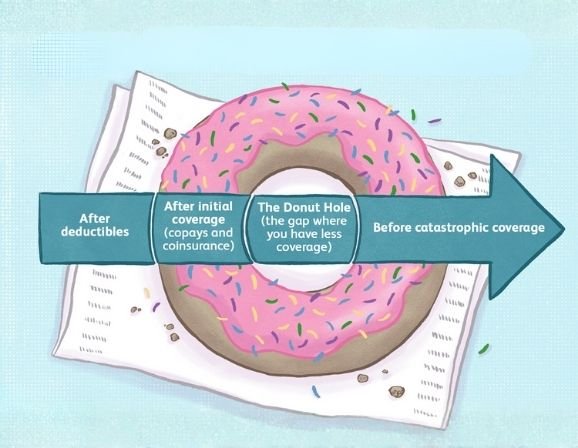
The Medicare Part D donut hole, also called the Medicare Part D coverage gap, was the middle stage of prescription drug coverage where people paid higher costs after passing a spending limit. For many older adults, this gap made medication management confusing and expensive. Let’s break down how the donut hole worked, what the prescription drug cost phases were, and how the new 2025 rules change everything.
What Is the Medicare Part D Donut Hole?
The donut hole was a temporary limit on what your prescription drug plan paid for covered medications. After you and your plan spent a certain amount on prescriptions, you entered a gap where you paid a larger share of costs until you reached another spending threshold.
The concept sounded odd, but followed a clear pattern: initial coverage, then the coverage gap, then the catastrophic coverage phase. Each phase changed how much you paid out of pocket.
How the Prescription Drug Cost Phases Work
Every Medicare Part D plan includes four cost phases. Understanding each stage helps you see where the Medicare Part D coverage gap fits.
1. Deductible Phase
You start by paying the full cost of your medications until you reach your annual deductible. Most plans set this near $545 in 2024, though amounts vary by insurer.
2. Initial Coverage Phase
After meeting your deductible, your plan begins to share costs with you. You might pay 25% of the drug price, and the plan covers the rest, until total spending (what you and the plan have both paid) reaches a preset limit.
3. Coverage Gap, The Donut Hole
Once spending passes that limit, you enter the donut hole. Historically, patients paid up to 100% of drug costs here. Over time, federal law reduced this burden, and as of 2025, the donut hole closes completely for all standard plans.
4. Catastrophic Coverage Phase
After spending enough out of pocket, you move to the catastrophic coverage phase, where your plan and Medicare cover almost all remaining costs for the year.
Entering and Leaving the Donut Hole

You enter the donut hole when the combined total of what you and your plan have spent on covered drugs reaches the initial coverage limit, about $5,030 in 2024. You leave it when your out-of-pocket drug costs hit $8,000 and move into catastrophic coverage.
Each dollar you pay in copays, deductibles, or coinsurance counts toward this limit. Discounts from manufacturers on brand-name drugs also count, helping you exit the gap faster.
For 2025, these thresholds will shift again under the new Medicare redesign, simplifying how out-of-pocket drug costs are calculated.
How Out-of-Pocket Drug Costs Are Counted
Not every dollar you spend counts toward closing the coverage gap.
Eligible costs include:
- Your deductible payments
- Coinsurance and copayments
- Discounts from brand-name drug manufacturers
- What others (family or charities) pay on your behalf
Excluded costs include plan premiums, non-covered drugs, and pharmacy dispensing fees. Knowing what counts keeps you from overestimating your progress through the prescription drug cost phases.
The Catastrophic Coverage Phase
Once you leave the donut hole, you enter the catastrophic coverage phase, where your drug costs drop sharply. Medicare pays 80% of covered drug expenses, the plan covers 15%, and you pay only 5%.
But starting in 2025, the law changes again: you will no longer pay any cost-sharing once you reach the new out-of-pocket cap of $2,000. That’s a major improvement for seniors relying on expensive medications.
| Take Control of Your Medicare Drug Coverage Today Get personalized help from Prime Life Financial to choose a Part D plan that limits your out-of-pocket costs before open enrollment closes. Enroll Now |
Closing the Medicare Donut Hole
The closing of the Medicare donut hole has been a long process. The Affordable Care Act gradually reduced the share of patients paid while in the coverage gap, from 100% down to 25%. By 2025, the Inflation Reduction Act will complete the process, eliminating the separate gap stage.
After 2025, beneficiaries will move directly from initial coverage to catastrophic protection once they reach the $2,000 limit. This streamlines the Medicare Part D coverage gap system and ends years of confusion about entering and leaving phases.
Why the Donut Hole Existed in the First Place
When Medicare Part D was created in 2006, Congress wanted to balance affordability with sustainability. To limit federal spending, a middle gap was built in, requiring enrollees to pay more once they hit a certain drug-spending threshold.
That middle section, shaped like a “donut,” gave the program its famous nickname. While it controlled national costs, it placed a heavy burden on individuals managing chronic diseases and multiple prescriptions.
The Real-World Impact of the Donut Hole
For years, the donut hole forced many seniors to make tough choices, either pay for vital medications or cut other daily expenses.
Studies from the Kaiser Family Foundation found that about one-in-four seniors in the gap skipped doses or split pills to stretch prescriptions.
The closing of the coverage gap means fewer people will face that choice. With a flat $2,000 limit starting in 2025, medication adherence is expected to improve nationwide.
Transition to 2025 Medicare Rules
The 2025 reforms reshape the entire prescription drug cost phase system. Key highlights include:
- Removal of the coverage gap entirely.
- A $2,000 annual cap on out-of-pocket drug costs.
- Spread-out payment options starting in 2025 to ease monthly expenses.
These updates make the program simpler, more predictable, and fairer, especially for patients using high-cost specialty drugs.
What the New Rules Mean for You in 2025
The new Medicare redesign changes everything about how out-of-pocket drug costs work. Starting in 2025, you will not face the Medicare Part D donut hole at all. Once your total spending reaches $2,000 for the year, your plan covers all additional prescription drug costs.
This new $2,000 cap gives peace of mind to seniors who used to fear mid-year cost spikes. You’ll know exactly when your spending stops increasing, no surprises. The change also makes drug coverage easier to compare between plans.
How Medicare Plans Handle the Change
The closing of the Medicare donut hole means plan structures will look different. Insurance carriers are redesigning benefit tiers and coinsurance rates to align with the new law.
In 2025, most Medicare Part D plans will include:
- Lower cost-sharing before reaching the $2,000 cap
- More predictable pricing for brand-name and generic drugs
- Simplified monthly billing and tracking for beneficiaries
The government will take on a higher share of total prescription costs, reducing the financial strain on both insurers and seniors.
How to Avoid the Medicare Part D Donut Hole in 2025
Even though the donut hole officially ends in 2025, millions still face it in 2024. The best way to manage your spending now is to track every cost that counts toward your out-of-pocket drug costs.
You can avoid or minimize time in the coverage gap by:
- Choosing generic versions of high-cost medications
- Using preferred in-network pharmacies
- Asking your doctor about lower-tier alternatives
- Comparing Part D plans with the Medicare Plan Finder tool
- Enrolling in programs that help with medication assistance
Planning early helps you stay under the coverage limit and ensures smoother spending before the full redesign takes effect.
The Role of Manufacturers and Discounts
Manufacturers of brand-name drugs play a crucial part in helping people leave the Medicare Part D coverage gap faster. During the gap, manufacturers provide discounts, which count toward your out-of-pocket drug costs, moving you closer to the catastrophic phase.
In 2025, the manufacturer’s share will adjust under the new structure, but the principle remains: discounts reduce patient costs and keep medications within reach for those who need them most.
| Don’t Wait, Medicare Enrollment Ends Soon Prime Life Financial can help you review new 2025 Part D options and find plans that cut your prescription costs. Contact Now |
How the Donut Hole Affected Medicare Spending
For nearly two decades, the donut hole shaped how Medicare paid for prescription drugs. It kept program costs sustainable but left seniors paying unpredictable bills. Studies from the Centers for Medicare & Medicaid Services showed that people entering the gap often slowed or stopped filling prescriptions, leading to higher hospitalizations later.
Closing the gap improves both financial and health outcomes. More consistent medication use reduces emergency visits and stabilizes long-term care expenses nationwide.
Simplifying the Prescription Drug Cost Phases
The 2025 redesign reduces four cost phases to a simpler three-phase model:
- Deductible phase: You pay 100% until your deductible is met.
- Initial coverage: Your plan shares costs until total spending reaches $2,000.
- Catastrophic protection: After $2,000, you owe nothing more for covered drugs.
This structure eliminates confusion, encourages adherence, and helps every beneficiary budget accurately for prescription care.
Why the Coverage Gap Closing Matters
Ending the Medicare Part D donut hole means seniors can manage chronic conditions without skipping doses. It also benefits caregivers and families who help older relatives manage multiple prescriptions.
For people with serious illnesses such as diabetes, cancer, or heart disease, the change could save thousands of dollars yearly. Predictable costs encourage treatment consistency and reduce long-term health risks.
What Happens to the Donut Hole in 2025
In 2025, the donut hole disappears completely. There is no middle stage of increased payment. Once beneficiaries hit the $2,000 out-of-pocket maximum, they transition to full coverage automatically.
This final step fulfills years of reform that began with the Affordable Care Act and continued through the Inflation Reduction Act. Medicare Part D will finally provide transparent protection across every prescription drug plan.
| Lock In Your 2025 Medicare Savings Now Open enrollment is approaching fast. Prime Life Financial experts can guide you to plans with the lowest prescription costs before deadlines close. Get Help |
Conclusion
The Medicare Part D donut hole was once one of the most confusing parts of Medicare drug coverage. It created sudden cost spikes for millions of seniors who depended on daily prescriptions.
Thanks to the 2025 reforms, that era ends. With a flat $2,000 cap, simple cost-sharing, and direct coverage from start to finish, Medicare beneficiaries can finally count on stability and affordability throughout the year.
If you haven’t reviewed your plan yet, this enrollment season is the perfect time. Let Prime Life Financial help you choose coverage that protects your health and your wallet before deadlines close or guide you if you decide to switch Medicare Part D plan options.
FAQs
How to explain the donut hole in Medicare?
The Medicare Part D donut hole was the stage when prescription drug coverage temporarily decreased, and you paid more out of pocket until reaching catastrophic coverage.
What happens to the donut hole in 2025?
The donut hole closes completely in 2025. Once you spend $2,000 on covered prescriptions, your plan covers all additional costs for the rest of the year.
How to avoid the Medicare Part D donut hole?
You can reduce costs by using generics, switching to preferred pharmacies, and comparing plans annually through Medicare open enrollment.
How long do you stay in the donut hole with Medicare Part D?
You stay in the coverage gap until your total out-of-pocket drug costs reach the threshold that moves you into catastrophic coverage, about $8,000 in 2024.